Building a disclosure research watchlist means choosing a small set of tickers, politicians, and insider entities you will actually review when new filings land—not mirroring every headline ticker into an inbox. ProBors lets you watch stocks, members of Congress, and whale accounts separately; the discipline is in what you add, when you add it, and how you prune noise after verification. This seven-step workflow shows how to tier a watchlist for congressional STOCK Act rows, Form 4 insiders, and cross-dataset follow-ups without alert fatigue. This is research context, not investment advice.
Why a watchlist beats scrolling the full feed
Congressional disclosure volume spikes in batches—one House PTR can add dozens of lines on a single filing date, while Senate periodic reports dump weeks of trades at once. Insider and whale feeds add hundreds of Form 4 prints on liquid names every month. Scrolling everything daily does not scale.
A good watchlist answers three questions before you add an item:
- Will I open the source PDF when this alerts? If not, skip it.
- Does this item cover a gap in my current list? Duplicate NVDA alerts from three angles create noise, not insight.
- Can I log transaction date, filing date, and chamber for this row? Watchlists work best when you already verified the first disclosure.
The goal is a short queue you trust—not maximum coverage.
Seven-step workflow on ProBors
-
Define your research lanes first. Split mental buckets: sector tickers you study (semiconductors, banks), politicians on committees you cover, and insider entities tied to those names. Write the list on paper before opening ProBors. Most researchers need fewer than 25 active items across all types.
-
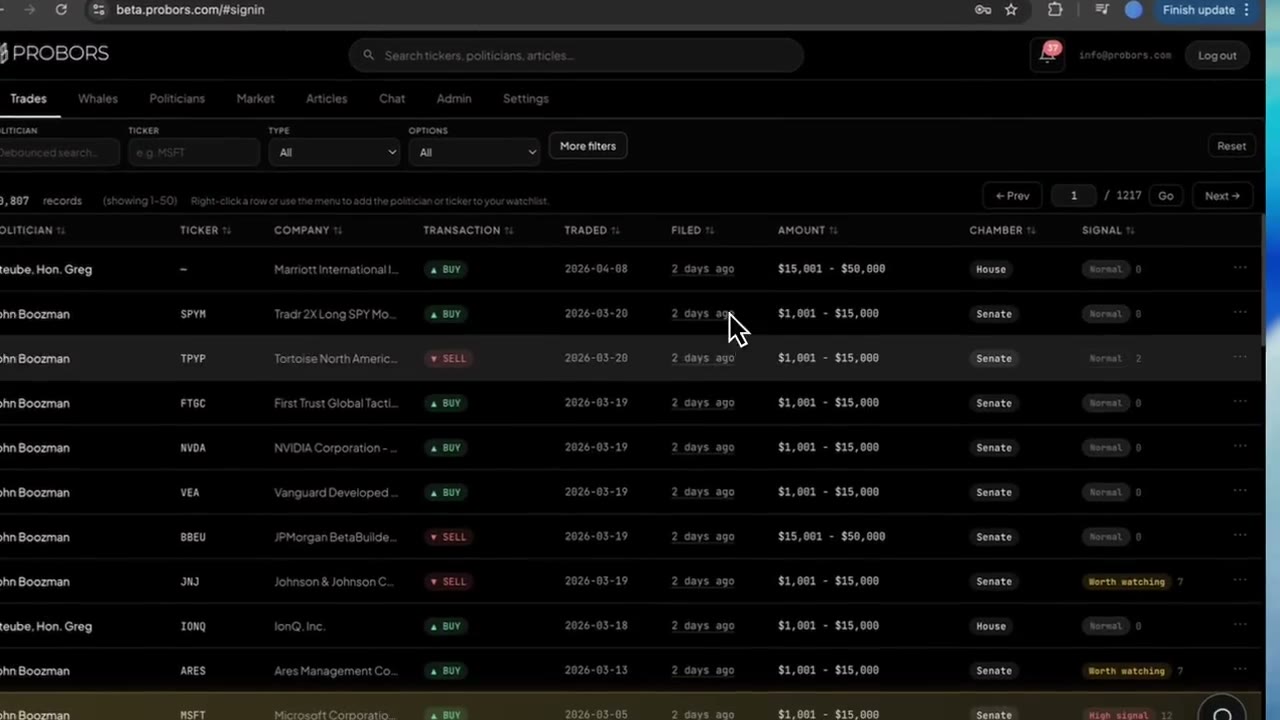
Start from verified rows, not headlines. Open Congressional trades or whale activity, filter by filing date for the last 7–30 days, and read rows you would cite in notes. Only after checking transaction date, amount bracket, and the linked source disclosure should you tap Add to watchlist on trade detail, a politician profile, or a whale context screen.
-
Tier by item type. Use three tiers in practice:
- Tier A (core): 5–10 liquid tickers where you combine congress and insider passes weekly
- Tier B (politicians): 3–8 members you follow for committee or portfolio context—not every viral name
- Tier C (whales): 2–5 insider entities where large Form 4 prints change your sector read
Mixing all three on one mental list is fine; mixing all three as duplicate alerts on the same symbol is not.
-
Set signal expectations before alerts fire. A Worth watching congressional row still carries Senate lag. A Normal insider sale on a mega-cap name may be routine. When you add a ticker, note whether you care about purchases, sales, or both—and whether a congressional line or Form 4 row should trigger your review. See how to filter congress trades by signal score for the congressional side.
-
Open the inbox with a filing-date sort habit. When an alert arrives, sort your recent watchlist activity by filing date to see what became public—not what traded today. Pair with filing date vs transaction date notes so you do not misdate a month-old Senate purchase as breaking news.
-
Run a weekly prune. Every Friday (or after a big batch like early July House filings), remove items you have not opened in 30 days, downgrade duplicate ticker alerts, and add one new row only if it passed source verification. Watchlists decay without pruning.
-
Cross-check before expanding. When a watched ticker fires on both congress and insider feeds, run the combined pass from how to combine congress and insider research before adding more related symbols. Overlapping tickers are common on liquid names; they are not automatic confirmation.
Examples: what belongs on a watchlist
Recent filings in ProBors as of July 8, 2026 illustrate how to choose items—not everything worth reading belongs on a permanent list.
| Politician | Chamber | Ticker | Type | Traded | Filed | Lag | Amount range | Signal |
|---|---|---|---|---|---|---|---|---|
| Shelley Capito | Senate | C | Sale | June 16, 2026 | July 6, 2026 | 20 days | $1,001–$15,000 | Worth watching |
| Gilbert Cisneros | House | DSGX | Purchase | June 30, 2026 | July 2, 2026 | 2 days | $1,001–$15,000 | Normal |
| Lloyd Doggett | House | HD | Purchase | June 18, 2026 | July 6, 2026 | 18 days | $1,001–$15,000 | Normal |
How to translate rows into watchlist decisions:
- Capito + Citigroup (C): Elevated signal on a Senate sale with a 20-day lag. A researcher covering financials might add C to Tier A and Shelley Capito to Tier B—but only after opening the Senate periodic PDF. The sale is portfolio context, not a timed trade signal.
- Cisneros + DSGX: Fast 2-day House lag, Normal label, small bracket. Useful for studying Cisneros's filing pattern after the early July batch; add Gilbert Cisneros to Tier B if you follow his committee work, not every single ticker from the batch.
- Doggett + HD: Normal reinvestment-style purchase in a July 6 House batch. Unless you cover Doggett specifically, this row belongs in a daily scan—not necessarily a permanent ticker alert.
Use examples like these as admission tests: verified source, clear research lane, and a reason you will reopen the row when the next filing lands.
Common watchlist mistakes
- Adding every ticker from a viral batch. One politician's 48-line PTR does not require 48 watchlist entries.
- Watching politicians without chamber context. Senate alerts batch weeks of trades; House PTRs can land next-day. Read chamber guides before you interpret inbox timing.
- Ignoring Form 4 noise on watched stocks. A congressional purchase alert and three insider sales the same week are a research prompt—not a conflict to resolve in the watchlist settings.
- Never pruning. Stale items train you to ignore alerts entirely.
- Skipping the source PDF once. If you added a row without verification, remove it and re-add after you confirm dates and amounts.
What this does not prove
A watchlist surfaces your prioritized public disclosures. It does not predict returns, prove that politicians or insiders share information, or replace reading original House PTR, Senate periodic, and Form 4 filings. Alerts mean new rows arrived in ProBors—not that a trade happened today. Amount brackets remain ranges; lag varies by chamber and filer.
FAQ
How many watchlist items should I start with?
Start with 10–15 total across tickers, politicians, and whales. Expand only after a month of actually opening alerts you care about. Most noise comes from list bloat, not missing data.
Should I watch the politician or the ticker?
Watch the politician when you follow their committee, voting record, or portfolio history. Watch the ticker when the symbol is your primary research object and any congressional or insider line matters. Many workflows use both—one politician Tier B entry and one Tier A ticker—not duplicate alerts for every line.
How is this different from the ProBors watchlist alerts product guide?
The ProBors watchlist alerts guide explains notification types and inbox mechanics. This workflow focuses on what to add and when to remove items so alerts stay useful.
Do alerts respect signal scores?
Alerts fire when new rows match watched items. Signal labels help you triage after the alert arrives—they do not gate whether ProBors ingested the row. Filter congressional feeds by signal when you review, not when you build the initial list.
Can I watch the same ticker for congress and insider filings?
Yes. Add the stock once and review inbox items by source. When both sides fire in the same week, compare transaction dates manually—there is no combined "overlap score."
Build a watchlist you will actually open
Add verified tickers, politicians, and whales on ProBors—then review new filings with signal context and source links in one workspace.
Get startedRelated reading
- ProBors watchlist alerts
- How to filter congress trades by signal score
- How to combine congress and insider research
- How to compare filing date vs transaction date
- How to read politician trade disclosures
Sources
- House Clerk Financial Disclosure (PTR) search
- Senate Financial Disclosures (eFD)
- SEC EDGAR search
- STOCK Act (Pub. L. 112-105)
- Rows were checked in ProBors and should be verified against the original filing.
- For ingestion health, see ProBors data status.
Sources & methodology
Last updated:
ProBors uses public disclosure records, SEC filings, House and Senate financial disclosure portals, market data, and in-product workflow checks. Articles are written as research education, not investment advice.