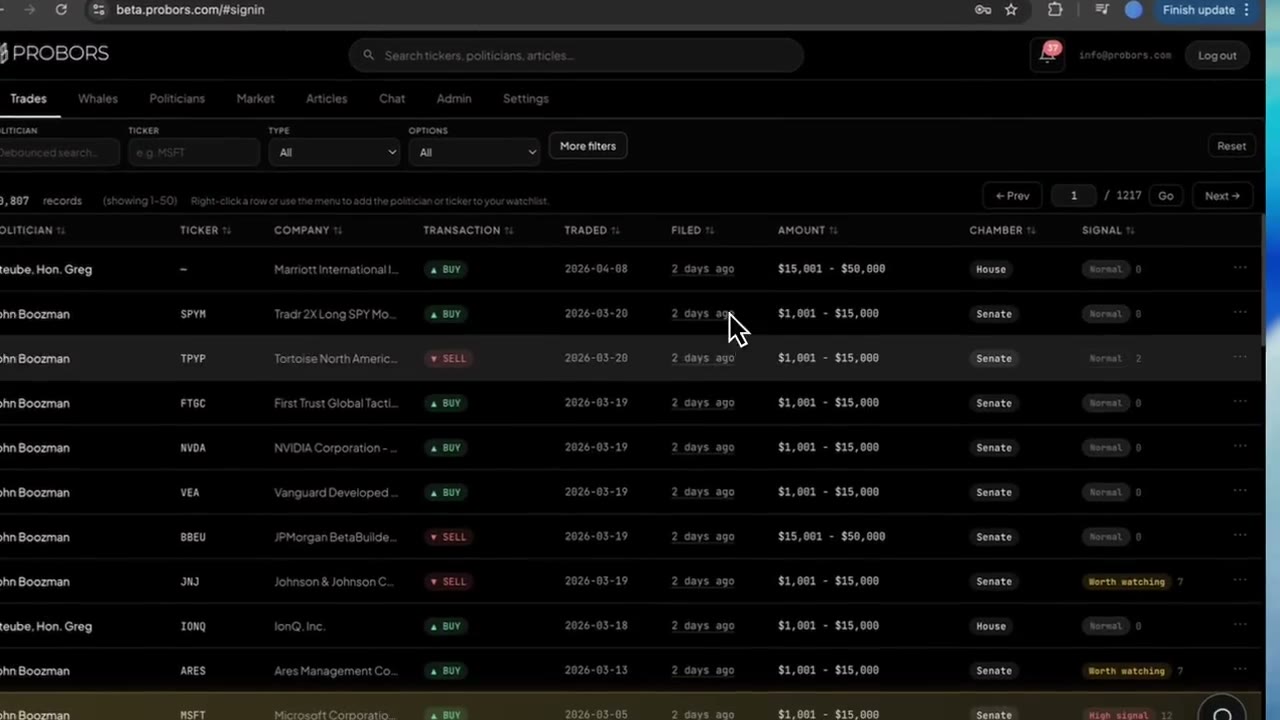
Misreading politician trade disclosures is the most common mistake new researchers make. The trade happened on the transaction date; you often learn about it only when the filing is published.
Transaction date vs filed date
- Transaction date: when the trade occurred
- Filed / disclosure date: when the form was submitted
Edge decays with delay. Always log both dates in your notes.
Amount brackets are ranges, not exact size
Many disclosures report ranges (for example $1,001–$15,000). Treat them as magnitude bands, not precise entries for sizing positions.
Asset type matters
Check whether the line item is:
- Common stock purchase or sale
- Option exercise
- SPAC or fund interest
- Spouse or dependent account
Mixing types creates false "senator bought tech" narratives.
Validate with a second source
Before acting on a headline:
- Open the original filing link
- Confirm ticker spelling
- Compare to market prices on the transaction window
- Check for subsequent amendments
ProBors surfaces structured fields so you spend less time parsing PDF tables.
FAQ
Are all politician accounts disclosed?
Coverage rules apply to covered officials and family accounts per filing rules. Always read the filing type.
Can disclosures be amended?
Yes. Watch for amended forms that change dates or amounts.
Research disclosures with structured data
Search politicians, open trade detail, and add tickers to your watchlist on ProBors.
Get startedRelated reading
Sources & methodology
Last updated:
ProBors uses public disclosure records, SEC filings, House and Senate financial disclosure portals, market data, and in-product workflow checks. Articles are written as research education, not investment advice.