
Introduction
Politician stock trades and insider trading activity this week continue to shape investor focus as 2025 winds down. In the past week, members of Congress have disclosed significant equity purchases in broad market ETFs and individual stocks, while corporate insiders have shown mixed behaviors with both large buys and notable sell-offs. Tracking what stocks politicians are buying and major insider transactions can offer clues into confidence levels at the highest levels of both government and corporate leadership. These moves matter because they often precede broader market shifts or reflect perceptions about near-term economic outlooks. This article uncovers latest politician stock trades, key insider filings, and the broader context behind these market signals to help traders stay informed.
Key Findings: Politician Trades & Recent Disclosure Data
Congressional Stock Activity
Recent STOCK Act disclosures reveal that several members of Congress have actively changed their portfolios:
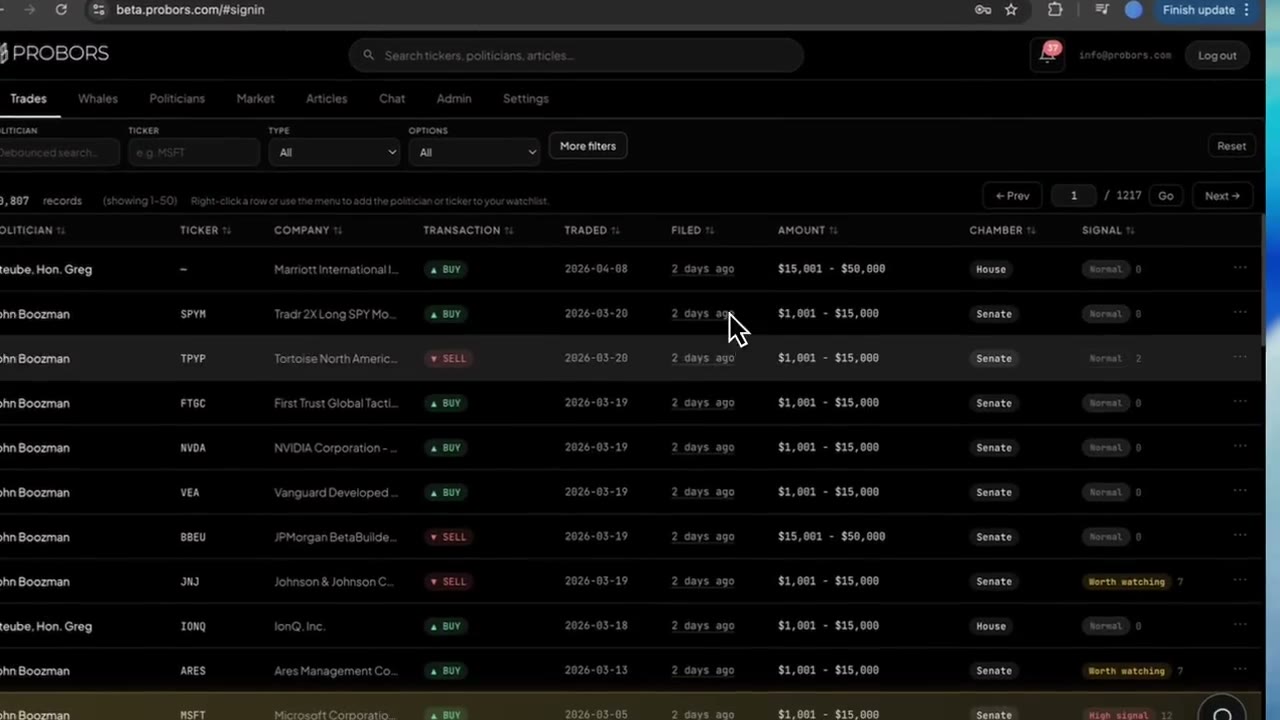
- Senator John Boozman disclosed purchases across diversified ETFs and individual companies, including Vanguard FTSE Developed Markets ETF (VEA), Vanguard FTSE Emerging Markets ETF (VWO), Arista Networks (ANET), Amazon.com (AMZN), Westwood Smallcap Fund (WWSYX), S&P Midcap 400 SPDR (MDY), and PayPal (PYPL). These buys reflect a broad market exposure strategy rather than narrow sector bets.
Boozman’s allocation towards broad-based funds like VEA and VWO suggests a long-term diversified stance, while his picks in AMZN and ANET point to confidence in e-commerce and networking sectors as 2025 concludes.
Political debates about stock trading rules are also intensifying. For example, a North Carolina Senate candidate publicly supports banning stock trading by Congress members and families to prevent conflicts of interest — highlighting rising scrutiny on these disclosures.
Detailed Analysis of Insider Trading Activity
Recent Jagged Insider Sales
Several high-profile insider sales have hit the tape this week:
-
Executive Chairman of ATI ($ATI) sold 47,355 shares (~$5.19M) on Dec. 18, 2025, significantly reducing his holdings.
-
Director at MQ ($MQ) disposed of 3,480 shares (~$17,401) on the same date, trimming his position.
-
President of Genuine Parts Company ($GPC) sold 1,648 shares (~$211,932).
These sales indicate that some executives are taking profits or rebalancing holdings as year-end approaches. While these individual trades are modest relative to total holdings in some cases, they can shape short-term sentiment for investors tracking insider actions.
Bullish Insider Signals Still Emerging
Not all insider activity is negative:
-
A director at $S reported a 40,000-share purchase (~$595,600) on Dec. 16, 2025 — a clear insider buy signal suggesting confidence in that company’s prospects.
-
A 10% owner in $MRUS increased their position by 150,795 shares (~$14.6M) — a significant ownership boost from a major stakeholder.
Large purchases like these often indicate conviction in the company’s strategy or an expectation of future performance improvement.
Form 4 Filings Show Broader Patterns
Independent data from SEC Form 4 filings highlights additional insider activity:
-
An executive at Incyte (INCY) sold shares across three days in mid-December, reducing holdings while still retaining a meaningful stake.
-
Snowflake (SNOW) director trimmed 19,111 shares (~$4.2M) — a sizable reduction that may signal liquidity preference over immediate long-term conviction.
These filings reinforce that insider sentiment is mixed, with some leaders buying and others selling depending on sector and company outlook.
Trends & Patterns in Trades
1. Broader Allocation Among Politicians
Unlike earlier years where tech-only bets dominated, recent politician stock trades tend toward diversified exposure via ETFs and established large caps like Amazon, which may reflect expectations of uncertain macroeconomic policy or a desire to hedge against volatility.
2. Increase in Market Oversight Debate
Public and political pressure to restrict Congress members from trading individual stocks is growing. This scrutiny, as highlighted by new policy proposals, could lead to regulatory shifts in how and when politicians disclose trades — potentially changing trading behaviors.
3. Insider Behavior Still Sector-Driven
-
Financial and industrial sectors see executive selling, perhaps linked to year-end profit realization.
-
More strategic buys by insiders and large owners suggest continued confidence in specific companies’ trajectories.
Key Takeaways
-
Diversified politician buys: Senate filings show politicians expanding into ETFs and major tech names — pointing to balanced risk outlooks.
-
Mixed insider sentiment: Recent insider activity includes both large sales and strategic buys, offering bullish and bearish indicators.
-
Elevated regulatory focus: Calls to ban Congress from stock trading reflect increased market governance concerns.
-
Investors should watch follow-up filings: Subsequent Form 4 and STOCK Act updates could signal further trend shifts into 2026.
Conclusion
This week’s politician stock trades and insider filings reveal a complex market landscape. With congressional figures adding diversified positions and corporate insiders balancing sales with strategic purchases, investors can glean insights into confidence levels across sectors. The rising political debate over stock trading conduct adds an additional layer of regulatory risk to the mix. Tracking insider trading activity this week and what stocks politicians are buying remains a valuable part of building a comprehensive investment perspective as the year closes. For real-time updates, follow live disclosures on ProBors — where you can see trades as they’re filed.
Sources & methodology
Last updated:
ProBors uses public disclosure records, SEC filings, House and Senate financial disclosure portals, market data, and in-product workflow checks. Articles are written as research education, not investment advice.