Comparing filing date vs transaction date is the first check every congressional disclosure researcher should run before citing a trade or sizing its market relevance. The transaction date is when the politician traded; the filing date is when the public first saw the row. ProBors shows both on every House PTR and Senate periodic line, and the gap between them—disclosure lag—often matters more than the ticker headline. This six-step workflow teaches you how to measure lag, sort by the right date for your question, and avoid treating a month-old Senate purchase like breaking news. This is research context, not investment advice.
Why both dates matter
Headlines and social posts usually anchor on filing date because that is when the disclosure became public. Price discovery, by contrast, mostly happened on or after transaction date. A purchase traded May 15 and filed June 16 already sat in the market for a month before you read it.
Researchers compare the two dates to answer different questions:
- "What became public this week?" → sort and filter by filing date
- "What happened around earnings or a vote?" → anchor on transaction date, then note lag
- "Is this chamber filing on time?" → compute calendar days between the dates per row
- "Should I still care about this trade?" → pair lag with amount bracket and subsequent price action
Neither date alone tells the full story. Filing date without transaction date overstates timeliness; transaction date without filing date hides how stale the public record is.
Six-step workflow on ProBors
-
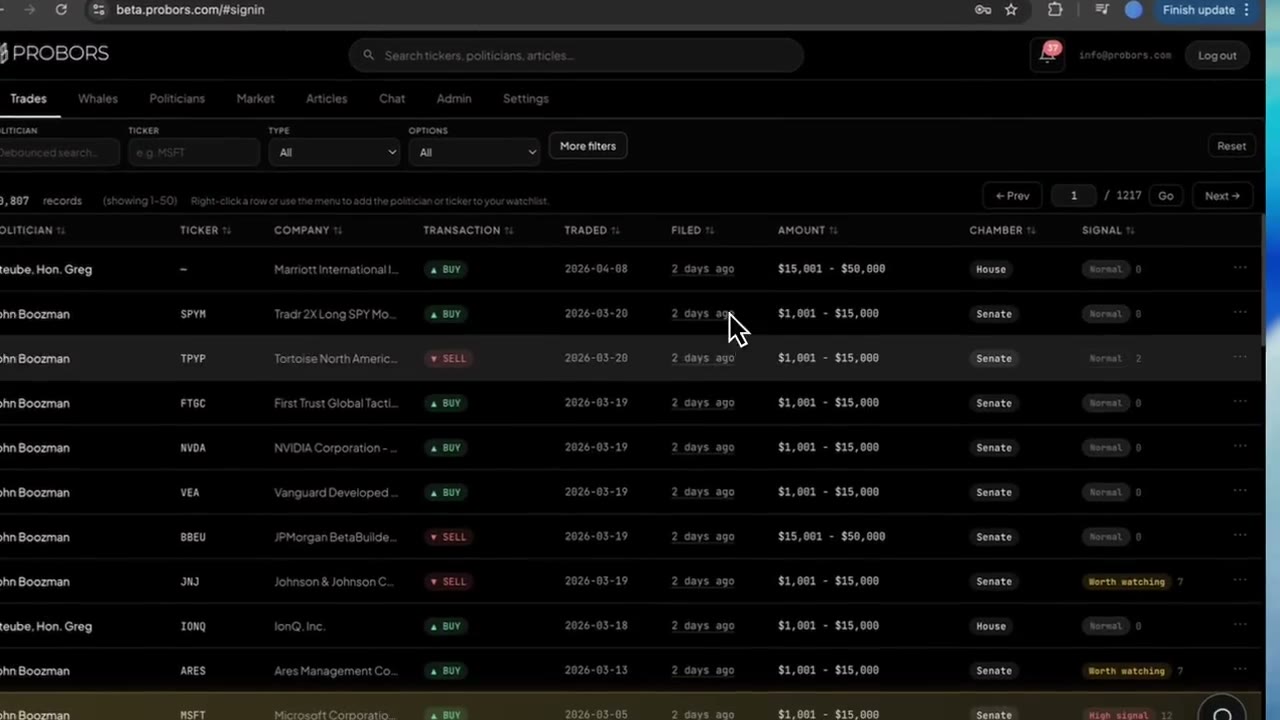
Open Congressional trades on probors.com and identify your research question first—new public filings this week, or trades that occurred during a specific event window.
-
Choose the primary sort. For a morning scan of what landed overnight, sort by filing date descending. For event-driven research (committee hearing week, earnings season), filter by transaction date range, then read filing date as a secondary column.
-
Compute disclosure lag mentally or in notes: calendar days from transaction date to filing date. ProBors displays both fields on each row; lag under about five days on House PTRs is relatively prompt; Senate periodic batches often run 20–35 days in recent data.
-
Split by chamber before comparing lag. House PTRs and Senate periodic reports follow different calendars. A 1-day House lag and a 32-day Senate lag in the same week are both normal for their chamber—not signs of data error.
-
Open the source disclosure for any row you plan to cite. Confirm the dates in the PDF match the structured fields. Amended filings can shift transaction or reporting dates after aggregators first ingest a row.
-
Layer context after dates. Once lag is logged, check transaction type, amount bracket, and whether other chamber members filed the same ticker on different trade dates. Date comparison is the frame; it is not the conclusion.
-
Watchlist on filing date, research on transaction date. Add tickers to a watchlist when a new filing appears. When writing notes or journalism, lead with transaction date and disclose lag explicitly ("purchased May 15, disclosed June 16—32-day lag").
Examples: same week, different lag stories
Recent filings in ProBors as of June 22, 2026 illustrate why date comparison belongs in every workflow. The rows below are deduplicated; lag is calendar days between transaction and filing dates as reported in each disclosure.
| Politician | Chamber | Ticker | Type | Traded | Filed | Lag | Amount range | Signal |
|---|---|---|---|---|---|---|---|---|
| Matthew Van Epps | House | TPR | Sale | June 16, 2026 | June 17, 2026 | 1 day | $15,001–$50,000 | Normal |
| Matthew Van Epps | House | AAPL | Sale | June 16, 2026 | June 17, 2026 | 1 day | $1,001–$15,000 | Normal |
| John Boozman | Senate | PLTR | Purchase | May 15, 2026 | June 16, 2026 | 32 days | $1,001–$15,000 | Worth watching |
| John Boozman | Senate | ECL | Sale | May 15, 2026 | June 16, 2026 | 32 days | $1,001–$15,000 | Worth watching |
| John Boozman | Senate | ALB | Purchase | May 15, 2026 | June 16, 2026 | 32 days | $1,001–$15,000 | Worth watching |
How to read these without misdating the narrative:
- Van Epps (1-day lag) traded June 16 and filed June 17—a timely House PTR pattern. If you sorted only by filing date on June 17, these rows look "new," and they are, but the economic event is still June 16.
- Boozman Senate batch (32-day lag) filed June 16 but reflects May 15 trades. A headline on June 16 that says "senator bought PLTR today" is wrong; the purchase happened in mid-May and the market had weeks to react before disclosure.
- Same filing date, different trade dates can appear when one senator files a periodic report covering multiple weeks. Always read transaction date per line, not per batch header.
Use a table like this to calibrate expectations: fast House rows deserve timeliness questions; slow Senate rows deserve "what moved between trade and filing?" questions.
Common mistakes when comparing dates
- Publishing filing date as trade date. "Congress member bought X on June 16" when June 16 is only the filing date and May 15 is the transaction date.
- Ignoring chamber. Judging Senate lag against a House timeliness standard—or vice versa—creates false "late filing" narratives.
- Sorting the wrong column for the question. Event studies need transaction date filters; ingestion monitoring needs filing date sorts.
- Skipping amendments. A corrected PTR can change dates after your first read. Re-check the source PDF before republication.
- Treating lag as intent. Long lag is often procedural, not evidence of concealment. Lag measures timeliness of public data, not motive.
For statutory context on why delays exist, see STOCK Act filing delay explained. For field-by-field reading tips, see how to read politician trade disclosures.
FAQ
Which date should I put in a headline?
Lead with transaction date for what the politician did ("purchased PLTR on May 15") and include filing date or lag for when the public learned ("disclosed June 16, 32 days later"). Never imply the trade happened on filing day unless the dates match.
What counts as a "fast" vs "slow" congressional disclosure?
In recent ProBors data, House PTR rows often file within 1–5 calendar days of the trade. Senate periodic lines commonly show 15–35 days. Treat those as rough benchmarks, not legal deadlines—individual reports vary.
Can I filter ProBors by transaction date and filing date separately?
Yes. Use transaction date when researching trades around a specific week or event. Use filing date when monitoring what became public in the last few days. Apply both when auditing lag for a single politician.
Does long lag mean the trade is irrelevant?
Not automatically. A 32-day-old purchase can still matter for portfolio tracking, conflict questions, or pairing with insider activity—it is simply not a real-time signal. Lag tells you how much price discovery already happened before disclosure.
How do filing dates relate to watchlist alerts?
Watchlist alerts typically fire on new filings (filing date). Your research notes should still record transaction date so you do not confuse "alert arrived today" with "trade happened today."
Compare trade and filing dates in one view
Sort congressional disclosures by filing or transaction date on ProBors, measure lag per row, and verify against the source PDF.
Get startedRelated reading
- How to read politician trade disclosures
- STOCK Act filing delay explained
- House stock trading tracker
- Senate stock trading tracker
- Congress trades filed mid-June 2026
Sources
- House Clerk Financial Disclosure (PTR) search
- Senate Financial Disclosures (eFD)
- STOCK Act (Pub. L. 112-105)
- Rows were checked in ProBors and should be verified against the original filing.
- For ingestion health, see ProBors data status.
Sources & methodology
Last updated:
ProBors uses public disclosure records, SEC filings, House and Senate financial disclosure portals, market data, and in-product workflow checks. Articles are written as research education, not investment advice.