Congressional stock trades filed this week are dominated by two disclosure batches: a same-day House PTR sweep from Rep. Matthew Van Epps and a Senate filing from Sen. John Boozman that covers trades from mid-May. As of June 21, 2026, ProBors shows 48 deduplicated disclosure rows with filing dates between June 14 and June 17—33 sales and 15 purchases across the House and Senate. Filing lag in that window runs from 1 day on the freshest House rows to 34 days on the oldest Senate lines still landing this week. This is a research snapshot, not investment advice.
Snapshot summary
ProBors sorts congressional disclosures by filing date. In the June 14–17 filing window:
- 48 rows after deduplication (identical politician, ticker, type, trade date, filing date, amount, and chamber removed)
- 2 politicians account for the entire week's filing volume: Van Epps (House) and Boozman (Senate)
- Chamber split: 13 House rows, 35 Senate rows
- Filing lag: 1-day minimum (Van Epps trades filed June 17 for June 16 transactions), 34-day maximum, 20-day median
- Earlier June filings from Peters, Allen, and Cisneros are still the freshest rows for those members—useful for comparing how quickly different chambers publish
House PTR rows filed within one business day are the cleanest timeliness example in this batch. Senate rows filed three to four weeks after the trade date are a reminder that "filed this week" does not mean "traded this week."
Recent disclosures worth a closer look
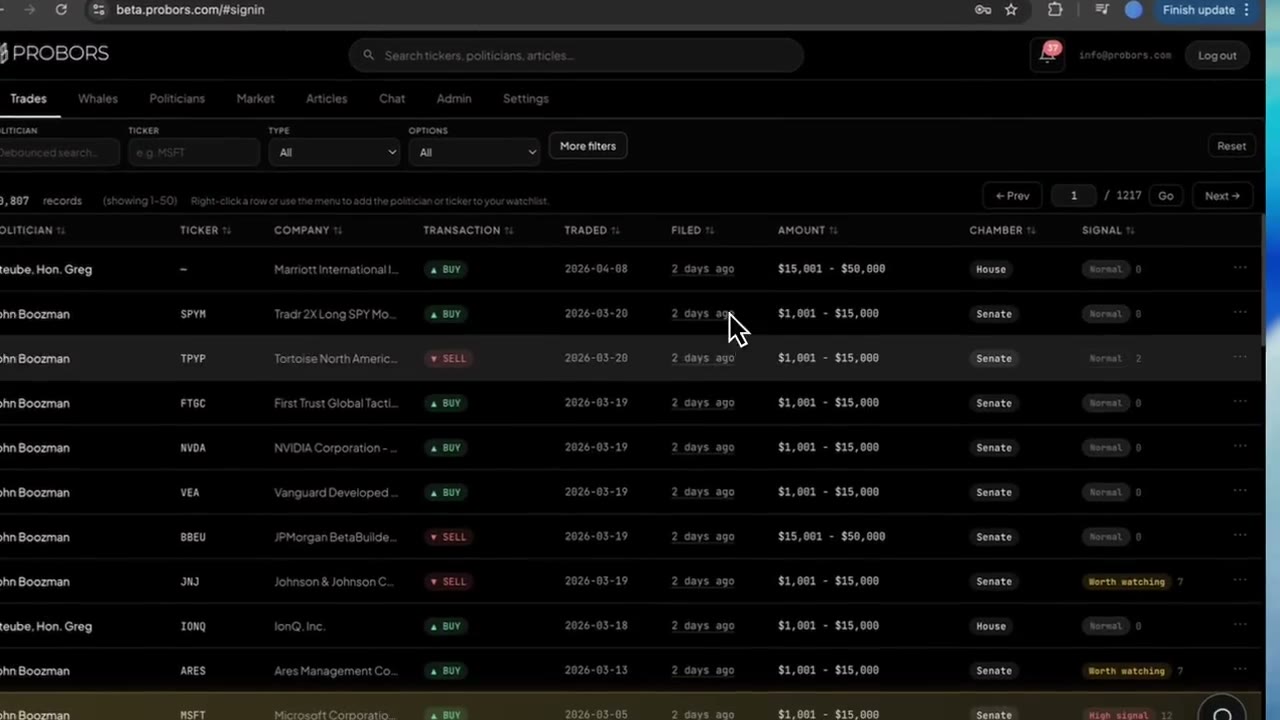
The table below shows deduplicated rows from ProBors as of June 21, 2026. Lag is calendar days between transaction date and filing date as reported in each disclosure.
| Politician | Chamber | Ticker | Type | Traded | Filed | Lag | Amount range | Signal |
|---|---|---|---|---|---|---|---|---|
| Matthew Van Epps | House | TPR | Sale | June 16, 2026 | June 17, 2026 | 1 day | $15,001–$50,000 | Normal |
| Matthew Van Epps | House | AAPL | Sale | June 16, 2026 | June 17, 2026 | 1 day | $1,001–$15,000 | Normal |
| John Boozman | Senate | PLTR | Purchase | May 15, 2026 | June 16, 2026 | 32 days | $1,001–$15,000 | Worth watching |
| John Boozman | Senate | LITP | Sale | May 27, 2026 | June 16, 2026 | 20 days | $1,001–$15,000 | Worth watching |
| Gary Peters | Senate | KHC | Purchase | May 21, 2026 | June 11, 2026 | 21 days | $1,001–$15,000 | Worth watching |
| Richard W. Allen | House | ACN | Sale | May 8, 2026 | June 8, 2026 | 31 days | $15,001–$50,000 | Worth watching |
| Gilbert Cisneros | House | BSX | Purchase | May 19, 2026 | June 5, 2026 | 17 days | $1,001–$15,000 | High signal |
How to read this without overfitting:
- Van Epps filed 13 separate sales on June 17 covering a broad large-cap basket (including NVDA, MSFT, META, and GOOGL) all traded June 16. That pattern looks like a portfolio rebalance filed on time—not a single-name story. ProBors scored those rows Normal (signal score 0) because the trades are small relative to bracket size and lack unusual committee overlap in the scoring model.
- Boozman landed a dense Senate batch on June 16 mixing purchases (PLTR, ALB) and sales (LITP, ACN, ECL). The 20–32-day lags mean the market already moved on these tickers before the filing appeared.
- Peters, Allen, and Cisneros illustrate that June research is not only about the latest filing date—members can file on different calendar weeks while you are monitoring the same ticker watchlist.
Filing lag in plain language
STOCK Act disclosures are periodic reports, not live trade feeds. In this snapshot:
- Fastest: Van Epps House rows at 1-day lag—trade June 16, filed June 17
- Typical Senate delay this batch: 20–32 days between trade and filing for Boozman lines
- Mid-range House: Cisneros BSX purchase at 17-day lag (May 19 trade, June 5 filing)
When you see a headline about a "new" congressional trade, check both dates. A purchase filed in mid-June may have happened in mid-May. For a deeper explanation of why that gap exists, see STOCK Act filing delay explained.
How to research this week's filings on ProBors
- Open Congressional trades and sort by filing date descending to mirror this snapshot.
- Filter by House or Senate when you want chamber-specific batches like the Van Epps or Boozman filings.
- Click a row to compare transaction date vs filing date and open the ticker workspace.
- Add tickers such as PLTR, TPR, or BSX to a watchlist if you want alerts on the next filing—not the last one.
- Cross-check any high-signal row against the original PTR PDF before citing it in notes or journalism.
For chamber-specific workflows, see the House stock trading tracker and Senate stock trading tracker guides.
What this does not prove
This mid-June filing wave does not show:
- That Van Epps's sales predict weakness in the 13 tickers he reported
- That Boozman's May purchases in PLTR or ALB were based on non-public information
- Exact dollar amounts—every row uses statutory brackets, not precise trade values
- Real-time congressional activity; the newest trade dates in this table are June 16, while several Senate rows reflect May transactions
Congressional disclosure is a lagging, incomplete window into politician portfolios. Use it for research context and source verification, not as a trading signal.
FAQ
Why did only two politicians file in the June 14–17 window?
Disclosure calendars vary by member, chamber, and reporting period. A quiet filing week does not mean no trading occurred—it often means reports are batched or not yet published. Check ProBors data status for ingestion health.
Are Van Epps's 13 sales one event or thirteen separate decisions?
The shared trade date (June 16) and next-day filing suggest a coordinated portfolio adjustment across multiple holdings. Researchers should still open each line in the source PTR in case amounts or account owners differ.
What does "Worth watching" or "High signal" mean on these rows?
ProBors signal scores weigh factors such as transaction type, size bracket, timing, and contextual flags. They help triage rows—they do not certify intent or future performance. See how ProBors trade signal scores work.
How often should I refresh a weekly snapshot like this?
Filing batches arrive unevenly. A weekly review is reasonable for monitoring; daily checks matter more when you track specific politicians or tickers on a watchlist.
Can Senate and House filings for the same ticker be compared directly?
Yes, but compare filing lag and amount brackets first. Senate periodic reports and House PTRs follow different schedules, so the same ticker can show unrelated trade dates in each chamber.
Track this week's congressional filings
Sort House and Senate disclosures by filing date, signal score, and ticker on ProBors.
Get startedRelated reading
- How to read politician trade disclosures
- STOCK Act filing delay explained
- Track Congress stock trades by ticker
- Congress stock trading tracker hub
Sources
- House Clerk Financial Disclosure (PTR) search
- Senate Financial Disclosures (eFD)
- STOCK Act (Pub. L. 112-105)
- Rows were checked in ProBors and should be verified against the original filing.
- For ingestion health, see ProBors data status.
Sources & methodology
Last updated:
ProBors uses public disclosure records, SEC filings, House and Senate financial disclosure portals, market data, and in-product workflow checks. Articles are written as research education, not investment advice.