
Introduction
Just this week, disclosures revealed that Pennsylvania’s federal lawmakers collectively bought and sold between $19.8 million and $58.8 million in stocks and securities in 2025.
These trades happened ahead of policy votes, hearings, and economic announcements, drawing scrutiny from both the public and Reddit communities. Critics say lawmakers are positioned in markets in ways ordinary investors cannot, while online discussions highlight anger, disbelief, and debates about fairness.
This article breaks down the recent trades, why they matter, and how they continue to fuel the debate over whether members of Congress should trade stocks at all.
Key Findings From Recent Disclosures
Recent filings reveal a familiar pattern:
- Trades concentrated in technology, defense, and energy sectors
- Multiple transactions executed shortly before key policy decisions
- Stock prices often moved significantly before public disclosure
- Total trading volume ranged from $19.8M to $58.8MWhile legal under the STOCK Act, these trades highlight gaps in transparency and raise questions about fairness.
What Happens If a Retail Trader Did This
For ordinary investors, similar trades would trigger compliance reviews or investigations:
- Timing Red Flags Buying shares before policy announcements can prompt broker inquiries and SEC scrutiny.
- Sector Knowledge Advantage Access to early policy discussions or non-public briefings is restricted for retail investors.
- Pattern Recognition Consistent success in sensitive sectors could invite investigation.Lawmakers benefit from delayed disclosure and minimal enforcement, giving them a legal advantage.
Recent Examples and Patterns
Sector-Specific Trades
- Financial Stocks: Lawmakers rotated into banks ahead of economic policy discussions.
- Tech & Industrial: Frequent purchases indicate focus on sectors impacted by government oversight.These moves often align with upcoming legislation or hearings, fueling the perception of trading with insider advantage.
Public Reaction
Reddit threads exploded with debate over these trades, comparing them to Nancy Pelosi’s reported ~17,000% lifetime returns and memes about “Congressional hedge funds.”

Why This Matters Now
Political Pressure
Calls to ban stock trading for lawmakers and their families have resurfaced. Recent proposals suggest including the president and vice president.
Ethics vs. Legality
The STOCK Act requires disclosure but does not prohibit trades. Delayed reporting allows lawmakers to legally trade with advantage, raising ethical questions.
Market Fairness
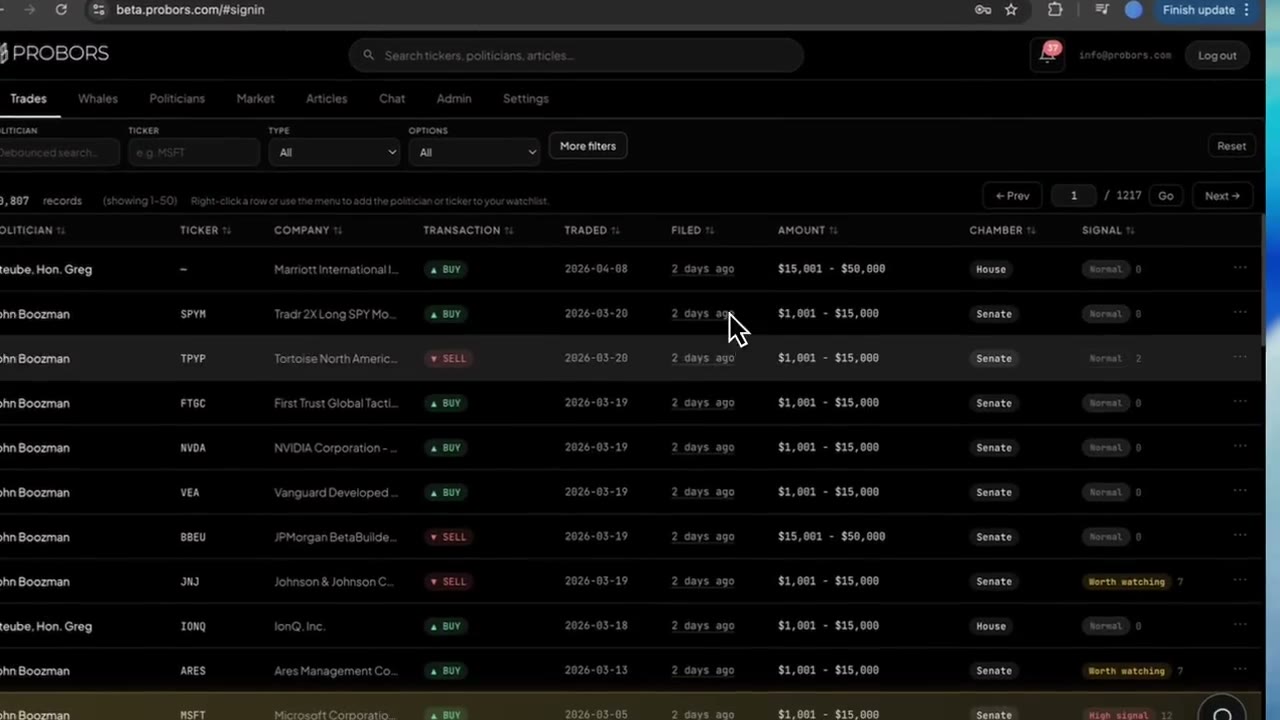
For retail investors, trades by lawmakers appear like inside bets. Platforms like ProBors provide transparency and real-time tracking to level the informational playing field.
Conclusion
The recent disclosures of tens of millions in trades by Pennsylvania lawmakers highlight the tension between legality, ethics, and market fairness. Reddit debates, public scrutiny, and ongoing reform discussions suggest this story will continue to drive conversation well into 2026.
Tracking these trades in real time on ProBors is the best way for investors to stay informed and understand patterns that are often invisible until weeks later.
Sources
- Pittsburgh Post-Gazette: Reporting on Pennsylvania lawmakers’ stock trades totaling $19.8M–$58.8M in 2025. Read here
- Washington Post: Coverage of congressional stock trading debates and proposed bans. Read here
- News & Observer: Proposed legislation to ban stock trading by lawmakers and families. Read here
- Reddit Threads: Viral discussions on politician trading and portfolio rotations. r/insiderData
- r/IndianStreetBets
- Livemint: Analysis of Nancy Pelosi’s reported 17,000% lifetime returns. Read here
- CEPR: Research and commentary on political power and profitable trades in Congress. Read here
Sources & methodology
Last updated:
ProBors uses public disclosure records, SEC filings, House and Senate financial disclosure portals, market data, and in-product workflow checks. Articles are written as research education, not investment advice.