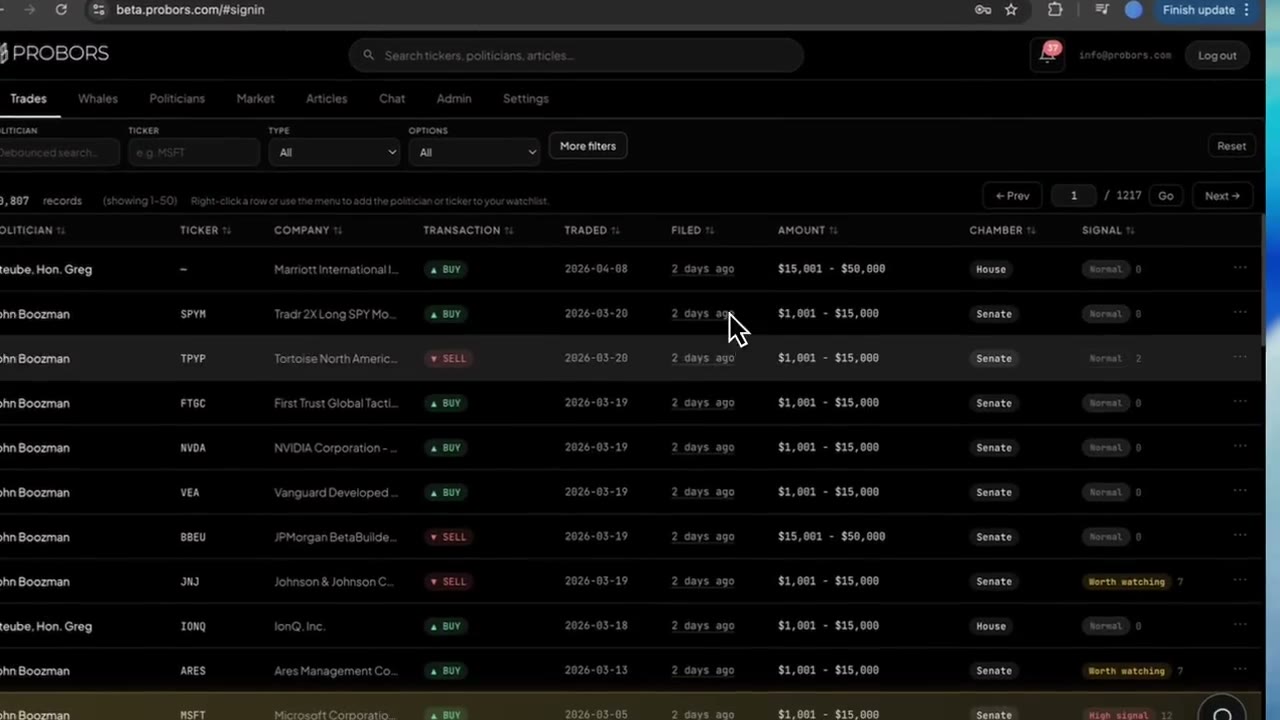
A ProBors watchlist turns passive scrolling into an alert-driven workflow. Track stocks, politicians, and whale entities—then review the inbox when something new lands.
What you can watch on ProBors
Watchlist item types map to how researchers actually work:
| Item type | Typical use |
|---|---|
| Stock / ticker | New congress or whale activity on NVDA, XOM, etc. |
| Politician | Any new filing for a specific member |
| Whale | Large transaction alerts for a tracked insider entity |
Mix types on one list: your core tickers plus the politicians you study every quarter.
Notification inbox workflow
- Add items from trade detail, politician profile, or whale context screens
- Configure notification preferences (email / in-app templates per product settings)
- Open the inbox when you see unread activity
- Ask AI: "Summarize my watchlist activity in the last 24 hours"
Signed-in users get get_watchlist_recent_activity in chat so you do not re-filter the entire market manually.
Alert discipline tips
- Too many tickers → noise; start with 10–20 liquid names you actually trade or study
- Politician-only alerts → great for niche follows; pair with ticker watchlists for sector context
- Check filed date when the alert fires—disclosure lag still applies
ProBors vs manual checking
Manual refresh works until you follow more than a handful of names. Watchlists scale your attention: the platform filters, you interpret.
FAQ
Do alerts mean instant trade timing?
Alerts mean new data arrived in ProBors—not that the politician traded today.
Can I watch whales and congress on the same ticker?
Yes. That is one of the fastest ways to spot overlapping interest.
Free tier watchlists?
Watchlist and notification availability depend on your plan; upgrade paths are in the subscription area of the app.
Build your ProBors watchlist today
Follow tickers and politicians—let alerts surface the next filing you should read.
Get startedRelated reading
Sources & methodology
Last updated:
ProBors uses public disclosure records, SEC filings, House and Senate financial disclosure portals, market data, and in-product workflow checks. Articles are written as research education, not investment advice.