Non-equity congressional disclosures—structured notes, fund capital calls, ADR lines without a clean ticker, and option exercises—show up in the same ProBors feed as plain stock purchases. They are easy to misread if you filter only by ticker or treat every row as a simple buy or sell of common shares. This seven-step workflow shows how to triage those rows, read the asset description, and decide what still deserves follow-up. This is research context, not investment advice.
Why non-equity rows need their own workflow
Congressional PTR and periodic reports are not limited to listed common stock. Members also disclose:
- Structured and index-linked notes (often with no ticker field)
- Private fund interests and capital calls (fund name only)
- ADR and foreign listings where the symbol may sit inside the description, not the ticker column
- Options and derivatives tied to an underlying equity
- Closed-end funds and bond-like instruments that carry a symbol but behave differently from a direct stock line
Researchers who skip these rows miss real activity. Researchers who flatten them into "Senator sold tech" headlines overstate what the filing actually says. A separate workflow keeps structured products, fund lines, and option rows in context.
Seven-step workflow on ProBors
-
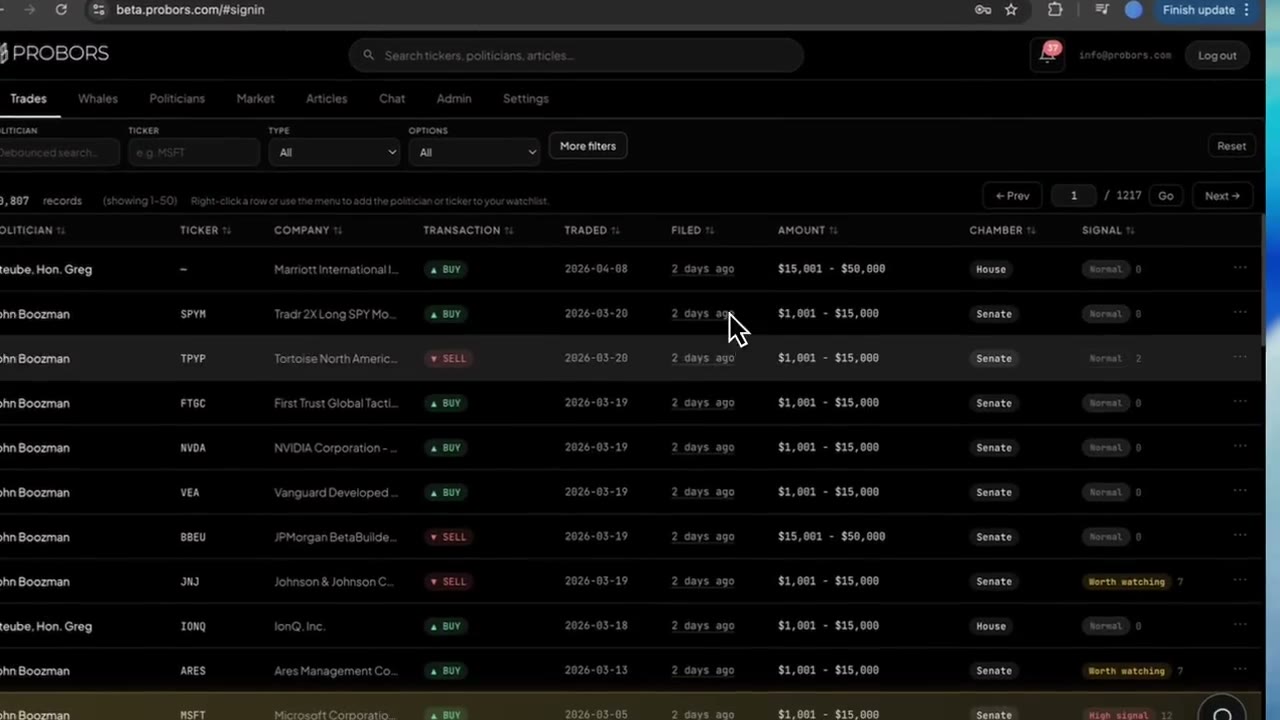
Scan recent filings without assuming every row has a ticker. Open Congressional trades on probors.com, sort by filing date, and scan the company or asset column—not only the ticker field. Rows marked
--or blank often still name the instrument in the description. -
Classify the asset type before you interpret direction. Read the transaction type and description together. Ask: is this common stock, a closed-end fund, a call or put, a structured note, or a fund capital call? ProBors surfaces structured fields on row detail; open the disclosure context window when the feed line looks truncated.
-
Separate options from outright stock. A "Sale" on a call option is not the same narrative as selling the underlying shares. Note strike price and expiration when they appear in the description. For a deeper product walkthrough, see ProBors congress options and derivatives guide.
-
Handle missing tickers explicitly. When the ticker column is empty, copy the full asset name into your notes. If an ADR symbol appears in parentheses inside the description (for example a foreign listing), record it manually—do not assume ProBors will map every international line to a U.S. quote.
-
Apply chamber and lag discipline. Senate structured-note sales filed in late July may reflect June trade dates. House fund or option lines can land within a few days. Log transaction date, filing date, and lag in plain language before comparing non-equity rows to equity trades on the same politician profile.
-
Read signal labels as row-level triage, not asset-type verdicts. A Worth watching label on a structured-note sale reflects ProBors context for that row—it does not mean the note is more "bearish" than a Normal equity purchase. Verify amount brackets; many non-equity lines still sit in the lowest disclosure band.
-
Confirm in the original PDF before citing. Follow the source link to the House Clerk PTR or Senate eFD filing. Structured descriptions in aggregators can truncate; the PDF is authoritative for legal description, counterparty, and date fields. Only after verification should you add the politician or underlying name to a watchlist.
Examples from recent filings
Recent filings in ProBors as of July 29, 2026 illustrate why this workflow matters. The table below is deduplicated—identical politician, asset, type, trade date, filing date, amount, and chamber appear once.
| Politician | Chamber | Asset | Type | Traded | Filed | Lag | Amount range | Signal |
|---|---|---|---|---|---|---|---|---|
| Max Miller | House | Riverside Acceleration Capital Opportunity Fund II (no ticker) | Purchase - Call Option | July 22, 2026 | July 26, 2026 | 4 days | $1,001–$15,000 | Normal |
| Bernie Moreno | Senate | BofA Finance equity index-linked note (no ticker) | Sale | June 24, 2026 | July 24, 2026 | 30 days | $1,001–$15,000 | Worth watching |
| Alan Armstrong | Senate | Williams Companies call option (WMB underlying) | Sale | June 22, 2026 | July 21, 2026 | 29 days | $250,001–$500,000 | Normal |
| Alan Armstrong | Senate | Air Liquide ADR France (no ticker in column) | Purchase | March 31, 2026 | July 21, 2026 | 112 days | $1,001–$15,000 | Normal |
How to read these without overfitting:
- Miller (House, fund call option) is a private-fund capital-call style line filed four days after the trade date—not a listed equity purchase. The research question is what fund exposure the member is building, not which mega-cap moved that week.
- Moreno (Senate, structured note sale) has no ticker because the instrument is a bank-issued note, not a share. The Worth watching label is useful for triage, but the 30-day Senate lag means the sale happened weeks before public disclosure.
- Armstrong WMB (Senate, call option sale) ties to a named underlying with strike and expiration in the source description. Treat it as derivatives activity on Williams Companies, not a straight common-stock sale of the same size bracket.
- Armstrong ADR (Senate, long lag) shows how international lines can list the issuer in prose while the ticker field stays empty. The 112-day lag reflects a July Senate batch for March trade dates—background context, not a fresh signal.
Use rows like these to practice classification before you write headlines or compare a member's non-equity activity to their equity portfolio.
Common mistakes with non-equity congressional rows
- Filtering to tickers only. You will drop structured notes, many fund lines, and some ADR disclosures entirely.
- Calling every "Sale" a stock sale. Option sales, note redemptions, and fund distributions use the same direction labels with different economic meaning.
- Ignoring amount brackets on exotic lines. A $1,001–$15,000 structured-note sale and a $250,001–$500,000 option line should not be weighted equally in portfolio narrative.
- Pooling Senate batch lag with House timeliness. Non-equity Senate lines often arrive in the same periodic dump as equity purchases from the prior month.
- Skipping the PDF because the aggregator row "looks complete." Long asset descriptions truncate in tables; the filing PDF holds the full legal name and dates.
For amount-band interpretation, see why congressional amount ranges are not exact dollars. For reading dates on any row type, see how to read politician trade disclosures.
FAQ
What counts as a non-equity congressional disclosure?
Any STOCK Act line that is not a straightforward common-stock purchase or sale: structured notes, fund interests, bonds, options, partial sales marked as derivatives, and many ADR or foreign listings. If the description reads like a legal product name rather than a single U.S. equity ticker, treat it as non-equity until verified.
Should I exclude rows with no ticker from my research?
No—exclude them from ticker-only screens, not from your workflow. Open the row, read the full description, and decide whether the underlying issuer or fund name matters to your question.
How do signal scores work on structured products?
Signal scores apply per disclosure row based on ProBors context fields. A higher label on a structured-note sale does not automatically mean "bearish on the linked index"; it means that row cleared a triage threshold worth opening.
Are House non-equity filings faster than Senate ones?
House PTR rows—including options and fund lines—often show shorter filing lag than Senate periodic batches. Compare lag within the same chamber and asset class, not across chambers on a single row.
Where can I see more examples of recent non-equity activity?
The July 21–26 congressional filing snapshot includes structured-note sales, fund call options, and ADR purchase batches from the same filing window—useful for practicing this workflow on live rows.
Triage every disclosure type in one feed
Open congressional trades on ProBors, classify non-equity rows, and verify each line against the original House or Senate filing.
Get startedRelated reading
- How to read politician trade disclosures
- ProBors congress options and derivatives guide
- Congress trades filed July 21–26, 2026
- Senate stock trading tracker
- How to screen congressional trades by filing lag
Sources
- House Clerk Financial Disclosure (PTR) search
- Senate Financial Disclosures (eFD)
- STOCK Act (Pub. L. 112-105)
- Rows were checked in ProBors and should be verified against the original filing.
- For ingestion health, see ProBors data status.
Sources & methodology
Last updated:
ProBors uses public disclosure records, SEC filings, House and Senate financial disclosure portals, market data, and in-product workflow checks. Articles are written as research education, not investment advice.