META congressional disclosures attract attention because Meta Platforms sits in the same mega-cap tech bucket as Apple, Microsoft, and Alphabet—names that show up routinely in Periodic Transaction Reports (PTRs) without implying policy foresight. In the last 90 days, ProBors shows six purchases and two sales filed between late April and late July 2026, with filing lag ranging from same-day to about six weeks on most House rows. This spotlight walks through recent Meta PTR lines, how to read cross-chamber activity, and what the disclosure record does not prove. It is research context, not investment advice.
Why META shows up in congress trackers
Meta is a large-cap social and advertising platform held in diversified portfolios, index funds, and retirement accounts. PTR rows on the ticker are common without suggesting non-public information. Useful questions on META are narrower:
- Which members filed Meta activity in the last 90 days?
- Was each row a purchase, sale, or partial sale?
- How many days passed between the transaction date and the public filing date?
- Does the amount range suggest a small rebalance or a larger position change?
- Did House and Senate filings cluster in the same calendar window?
A ticker spotlight should answer those fields from source-backed rows, then let you decide whether deeper chart or insider review is warranted.
Recent META filings in ProBors
The table below reflects Meta PTR rows in ProBors as of July 26, 2026, sorted by filing date (newest first). Filing lag is calendar days between the transaction date and the filed date as reported in ProBors. Rows are deduplicated on politician, transaction type, dates, amount, and chamber.
| Politician | Type | Traded | Filed | Lag (days) | Amount range | Chamber |
|---|---|---|---|---|---|---|
| Alan Armstrong | Purchase | 03/27/2026 | 07/21/2026 | 116 | $15,001 – $50,000 | Senate |
| Matthew Robert Van Epps | Sale | 06/16/2026 | 06/17/2026 | 1 | $1,001 – $15,000 | House |
| Michael McCaul | Purchase | 05/28/2026 | 06/10/2026 | 13 | $15,001 – $50,000 | House |
| John McGuire | Purchase | 06/04/2026 | 06/04/2026 | 0 | $1,001 – $15,000 | House |
| Ro Khanna | Purchase | 04/02/2026 | 05/13/2026 | 41 | $1,001 – $15,000 | House |
| Daniel Crenshaw | Sale | 05/05/2026 | 05/05/2026 | 0 | $1,001 – $15,000 | House |
| Michael McCaul | Purchase | 04/17/2026 | 05/04/2026 | 17 | $1,001 – $15,000 | House |
| Daniel Crenshaw | Purchase | 04/28/2026 | 04/28/2026 | 0 | $1,001 – $15,000 | House |
Snapshot summary (filed since late April 2026): 8 deduplicated META PTR rows in this window—6 purchases and 2 sales; 7 House and 1 Senate. Among rows with 2026 transaction dates, filing lag ranges from same-day to 41 days; the middle value among non-zero-lag filings is 13 days.
The Alan Armstrong row stands apart: the transaction date is late March 2026 while the filing date is July 21, 2026. That extended lag may reflect a late disclosure, amendment, or batch filing—verify the original Senate PTR before treating it like a fresh trade signal.
Always verify individual rows against the official source before citing them:
- House PTR search: disclosures-clerk.house.gov
- Senate eFD search: efdsearch.senate.gov
Cross-chamber patterns worth noting
Three patterns stand out in this Meta sample—and none of them are trading signals on their own.
1. Purchases dominate, but sales still appear
Rep. Michael McCaul filed two META purchases in April and May 2026, while Rep. Daniel Crenshaw filed a same-day purchase in late April and a same-day sale in early May. Rep. Matthew Robert Van Epps filed a sale one day after his transaction date in mid-June. Direction alone does not tell a single story when mega-cap names sit in many portfolios at once.
2. Filing lag varies more than ticker direction
Rep. John McGuire and Rep. Daniel Crenshaw each filed purchases the same day as the transaction. Rep. Ro Khanna’s April purchase shows a 41-day gap between trade and filing. That spread is why congressional trackers must show both dates—see the STOCK Act filing delay guide for the legal 30/45-day framework.
3. Senate activity is thinner but still worth checking
Sen. Alan Armstrong’s July filing is the only Senate row in this 90-day window. When you research META, filter by chamber so a House-heavy table does not hide Senate filings filed on a different schedule.
How to research META on ProBors
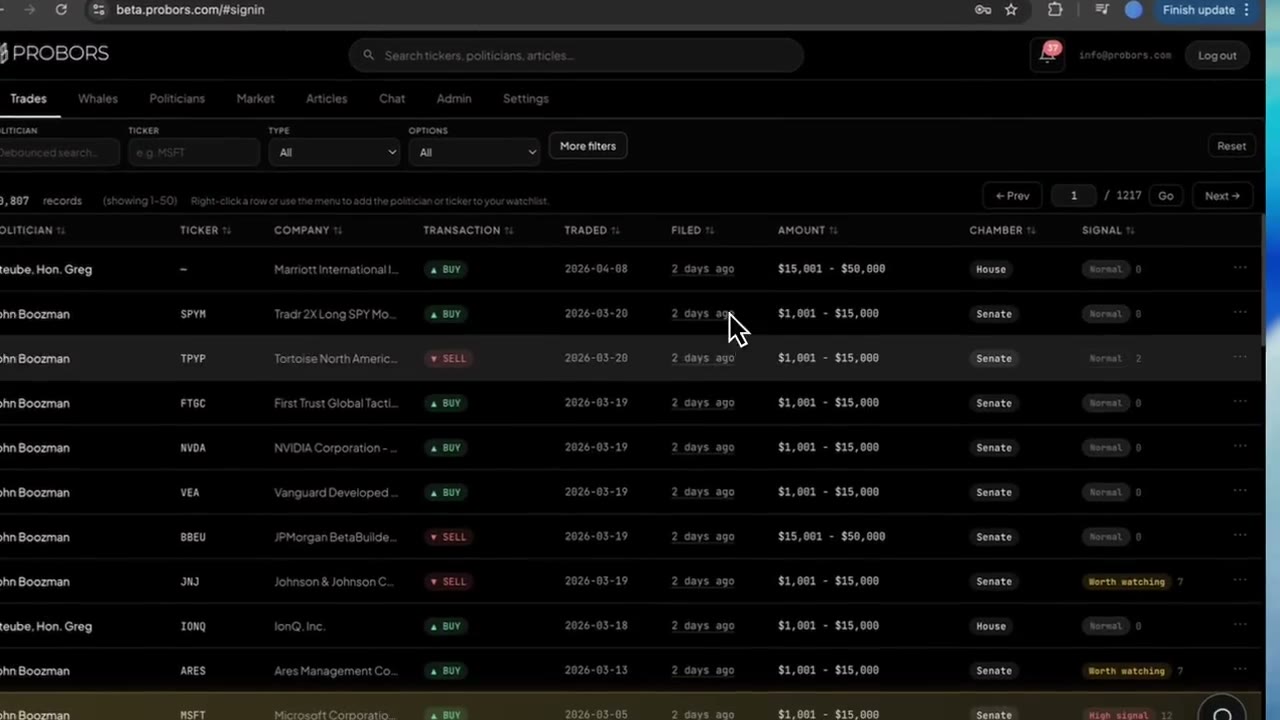
Use a ticker-first workflow when Meta is already on your watchlist:
- Open Market → META (or search
METAin the dashboard). - Scroll to the Congress trades table and sort by filed date.
- Click a row to open trade context—transaction type, amount range, chamber, and signal tier.
- Toggle congress markers on the price chart to see where disclosures landed relative to daily bars.
- Cross-check Form 4 / whale activity on the same ticker before treating a PTR row as isolated.
- Add META to a watchlist if you want alerts on the next filing—not on live price.
For chart marker details, see the market chart congress markers guide. For the full ticker workspace layout, see the market workspace guide.
What this META data does not prove
A congressional disclosure table on Meta does not prove:
- That members traded on non-public information
- That META will rise or fall because a PTR was filed
- Exact share counts or dollar proceeds (ranges are bands, not precise fills)
- Real-time intent—most rows in this sample posted days or weeks after the transaction date
- Committee influence or policy outcomes tied to a single trade line
PTR data is a public record for transparency, not a timing edge. The useful output is a verified research trail: who filed, what type, when it traded, when it became public, and how that row compares to other disclosures on the same ticker.
FAQ
How often do members disclose META trades?
Mega-cap tech names like Meta appear in PTRs throughout the year as members rebalance diversified holdings. Frequency varies by member—not every filing reflects active trading conviction.
Is a same-day filing more significant than a 40-day lag?
Not necessarily. Same-day filings can reflect routine portfolio maintenance; longer lags are common under STOCK Act deadlines. The filing date tells you when the public could see the row—not when the trade happened.
Should I compare META congress trades to insider Form 4 filings?
Yes, when you want the full picture. Congressional PTRs and executive Form 4s follow different rules, deadlines, and reporting formats. Keep them in separate lanes in your notes.
Does ProBors show signal scores on META rows?
ProBors can attach signal tiers to congressional rows based on factors like filing lag, price movement, and repeat activity. A higher tier is a triage hint—not a buy or sell recommendation.
Related reading
- How to research a ticker across House and Senate
- GOOGL congressional disclosures explained
- MSFT congressional disclosures explained
- Track congress stock trades by ticker
Sources
- House Financial Disclosure (PTR search)
- Senate eFD search
- STOCK Act overview (Congress.gov)
- Rows were checked in ProBors and should be verified against the original filing.
- Ingestion health: probors.com/status
Research META disclosures in one workspace
Filter congressional PTRs by ticker, overlay markers on price, and cross-check insider filings on ProBors.
Get startedSources & methodology
Last updated:
ProBors uses public disclosure records, SEC filings, House and Senate financial disclosure portals, market data, and in-product workflow checks. Articles are written as research education, not investment advice.