Form 4 reports changes in insider ownership—purchases, sales, grants, and exercises—usually within two business days of the transaction. Form 144 is a notice of intent to sell restricted or control securities under Rule 144, filed when an insider plans to place shares into the market. Researchers who treat every insider headline as a Form 4 purchase often misread planned dispositions, miss the filing that actually documents the trade, or confuse a notice with a completed sale. This guide explains what each form proves, when each appears, and how to triage both without overfitting. It is research context, not investment advice.
Form 4: the ownership-change filing
SEC Form 4 is the workhorse insider disclosure. Under Section 16(a) of the Securities Exchange Act, officers, directors, and 10% beneficial owners of reporting companies generally file Form 4 when they buy, sell, receive grants, exercise options, or otherwise change beneficial ownership.
The SEC investor bulletin on Forms 3, 4, and 5 states that Form 4 is typically due within two business days after the transaction date. That makes Form 4 the first place to look when you want to know whether an insider actually bought or sold—and how many shares changed hands.
What Form 4 tells you
| Field area | Research value |
|---|---|
| Transaction codes | Separates open-market purchases from option exercises, gifts, tax withholding, and other non-voluntary flows |
| Shares and price | Size and execution context for the reported line |
| Direct vs indirect ownership | Whether the insider held shares personally or through a trust, spouse, or entity |
| Filing date vs transaction date | Measures compliance with the two-business-day rule and your information lag |
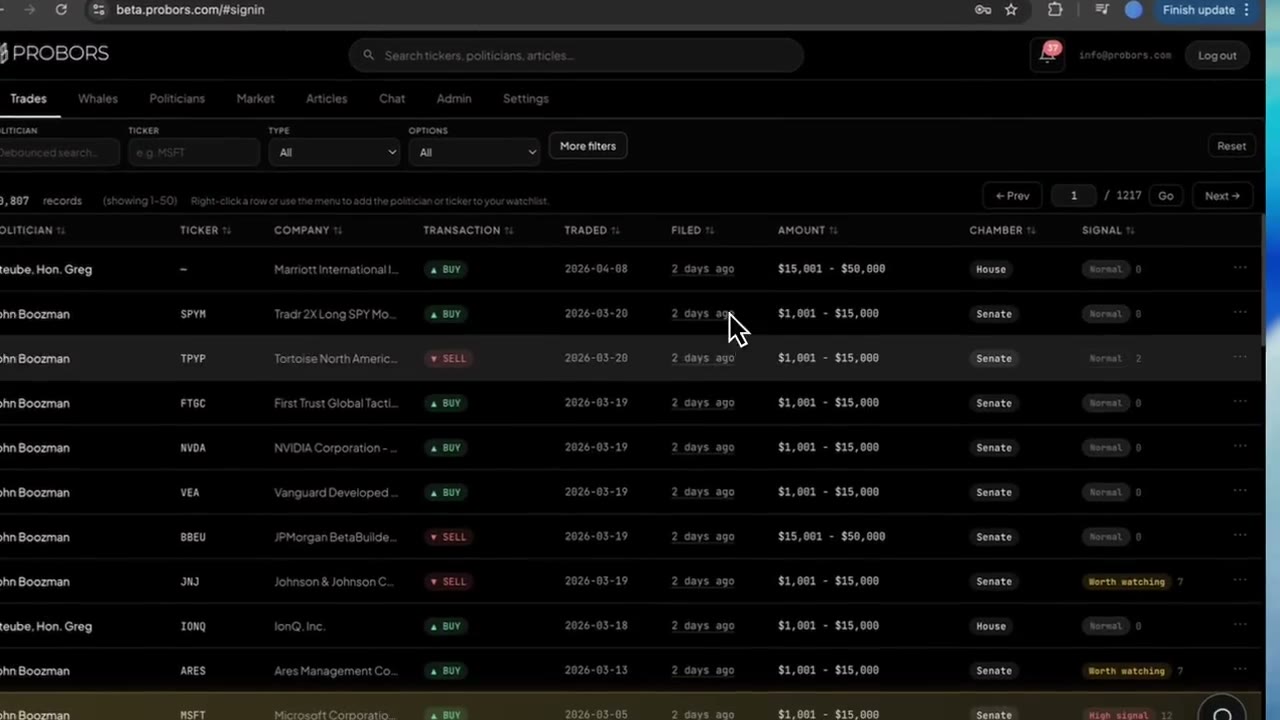
ProBors indexes Form 4 activity in the Whales tab and related insider views so you can filter by ticker, transaction type, and signal score without parsing raw EDGAR tables by hand.
Form 144: the planned-sale notice
SEC Form 144 is different in purpose. Under Rule 144, insiders and other affiliates who hold restricted securities or control securities may need to file Form 144 when they intend to sell those shares into the public market.
Form 144 is a notice of proposed sale, not a confirmation that shares already traded. The SEC's Form 144 guidance explains that the filing describes the number of shares the seller plans to offer, approximate sale date, and whether the sale relies on Rule 144 safe-harbor conditions.
What Form 144 does and does not prove
| Form 144 shows | Form 144 does not show |
|---|---|
| Intent to sell a stated share quantity | That the sale completed at the stated price |
| Approximate timing window | Whether the insider cancelled or reduced the planned sale |
| Whether Rule 144 conditions apply | Insider sentiment in isolation—many sales are tax, diversification, or compensation-driven |
A Form 144 headline that reads "CEO plans to sell 50,000 shares" is materially different from a Form 4 line showing an open-market sale on a specific date. Treat them as linked but not interchangeable documents.
Side-by-side comparison
| Question | Form 4 | Form 144 |
|---|---|---|
| Primary purpose | Report a completed ownership change | Notify the SEC of a planned sale of restricted/control shares |
| Typical timing | Within two business days after the transaction | Before or at the time of placing the sale order (Rule 144 workflow) |
| Proves a trade happened? | Yes—for the reported transaction line | No—only that a sale is intended |
| Best for spotting open-market buys | Yes | No |
| Best for anticipating affiliate sales | Sometimes, after the sale files | Yes, as an early notice |
| Common researcher mistake | Treating every code as a voluntary purchase | Treating a notice as a completed dump |
How the two filings interact in practice
A realistic insider sale workflow often involves both forms:
- An insider with restricted shares from compensation may file Form 144 when planning to sell into the market under Rule 144.
- When shares actually sell, a Form 4 line documents the disposition—often with a sale transaction code and updated share count.
- Large planned sales can cluster around vesting windows, tax deadlines, or 10b5-1 plan schedules. The notice gives lead time; the Form 4 confirms execution.
Researchers building a timeline should log Form 144 filing dates separately from Form 4 transaction dates. Comparing the two helps you see whether a planned block matched the eventual sale size—or whether the insider filed a notice and later sold a smaller amount.
Common mistakes when reading insider headlines
-
Calling every Form 4 sale a bearish signal. Option exercises, tax withholding, and 10b5-1 plan dispositions routinely appear as sales without implying a new negative view. See why insider selling is usually not a signal for triage context.
-
Ignoring transaction codes on Form 4. A "P" purchase and an "S" sale mean different things than an "M" exercise or "F" tax payment. Always read the code column before writing a narrative.
-
Treating Form 144 as real-time. The notice may precede the sale by days or weeks. Price action on the notice date does not reflect the eventual execution.
-
Skipping amendments. Both form types can be amended. A corrected Form 4 can change share counts or dates; always check whether you are reading the latest filing.
-
Mixing insider forms with congressional PTRs. STOCK Act Periodic Transaction Reports follow different deadlines and amount brackets. Keep congressional and insider research lanes separate unless you are deliberately cross-checking a ticker.
How to research Form 4 and Form 144 on ProBors
-
Start on the Whales tab for large insider transactions indexed from Form 4 activity. Filter by ticker or transaction type to separate purchases from sales and exercises.
-
Open the filing link on any row and confirm whether you are reading Form 4 (completed change) or a related notice. ProBors surfaces structured fields; EDGAR remains the citation layer.
-
Cross-check timing. Note the transaction date on Form 4 rows and compare filing lag in plain language ("filed two days after the trade"). For planned sales, log the Form 144 notice date separately.
-
Use signal scores for triage, not verdicts. A high-signal Form 4 purchase cluster deserves a closer read; a routine Form 144 notice during a vesting window may not.
-
Add the ticker to a watchlist if you want alerts when follow-on Form 4 lines confirm or contradict an earlier notice.
-
Pair with congressional context only when the ticker also appears in STOCK Act filings—useful for journalists, not proof of coordination.
For a deeper Form 4 workflow, see the Form 4 insider buying tracker guide. For large-transaction triage, see how to triage whale transactions on ProBors.
What this does not prove
Matching Form 144 notices to later Form 4 sales does not prove insider timing skill, illegal trading, or that you should trade the same direction. Rule 144 sales are often pre-planned. Form 4 purchases can be small relative to net worth. Neither form reveals non-public information—and neither replaces reading the full filing and the company's own disclosures.
FAQ
Do all insider sales require Form 144?
No. Form 144 applies to sales of restricted or control securities under Rule 144 conditions. Many open-market sales by insiders who already hold freely tradable shares are reported on Form 4 without a separate Form 144 notice. Always read the filing type on EDGAR.
Which form should I check first for insider buying?
Form 4. Purchases of freely tradable shares appear there with transaction codes and share counts. Form 144 is oriented toward planned sales of restricted or control stock, not typical open-market insider buys.
How fast must Form 4 be filed?
The SEC generally expects Form 4 within two business days after the transaction date for reporting persons subject to Section 16. Late filings happen; note the lag but do not assume every delay is meaningful.
Can Form 144 appear without a follow-on Form 4?
A planned sale might not execute as filed, or execution might be reported through a different filing path depending on the transaction structure. If you see Form 144 without a matching Form 4 sale line, the insider may have reduced or cancelled the planned disposition—or the sale may not yet have settled.
Does ProBors show Form 144 notices?
ProBors focuses on structured insider and whale activity drawn primarily from Form 4 ownership changes. For Form 144 notices, verify directly on SEC EDGAR and use ProBors for confirmed transaction rows and cross-ticker context.
Triage insider filings with structure
Review Form 4 activity, whale transactions, and congressional disclosures in one ProBors workspace.
Get startedRelated reading
- Form 4 insider buying tracker
- How to triage whale transactions on ProBors
- Why insider selling is usually not a signal
- SEC EDGAR vs ProBors disclosure workflow
Sources
- SEC Form 4 PDF
- SEC Form 144 PDF
- SEC investor bulletin: Forms 3, 4, and 5
- SEC Rule 144 guidance
- 17 CFR § 230.144 (Rule 144 text)
- Rows were checked in ProBors and should be verified against the original filing.
- Ingestion health: probors.com/status
Sources & methodology
Last updated:
ProBors uses public disclosure records, SEC filings, House and Senate financial disclosure portals, market data, and in-product workflow checks. Articles are written as research education, not investment advice.