A congressional disclosure research memo is a short, source-backed note you can hand to an editor, file in your own archive, or revisit before publishing—not a headline draft. The memo should state who filed, which chamber, what changed (purchase, sale, option, or non-equity line), both dates with lag in plain language, the amount bracket, and what you still need to verify in the original PDF. ProBors gives you structured rows and links to House and Senate filings; the workflow below turns those rows into consistent notes without treating a September Senate batch as “today’s trade.” This is research context, not investment advice.
What belongs in a memo (and what does not)
A usable memo answers five questions in one screen:
- Who filed, and is this House PTR or Senate periodic reporting?
- What asset is on the line (ticker, fund, LLC, bill, or option)?
- When did the trade happen versus when did the public filing land?
- How large is the bracket on the form—not exact dollars?
- So what is still unknown (committee overlap, prior rows on the same ticker, amendments)?
Leave out price targets, “Congress is bullish” verdicts, and share counts inferred from brackets. If you cannot open the source PDF yet, say “PDF pending” instead of guessing.
Seven-step workflow on ProBors
-
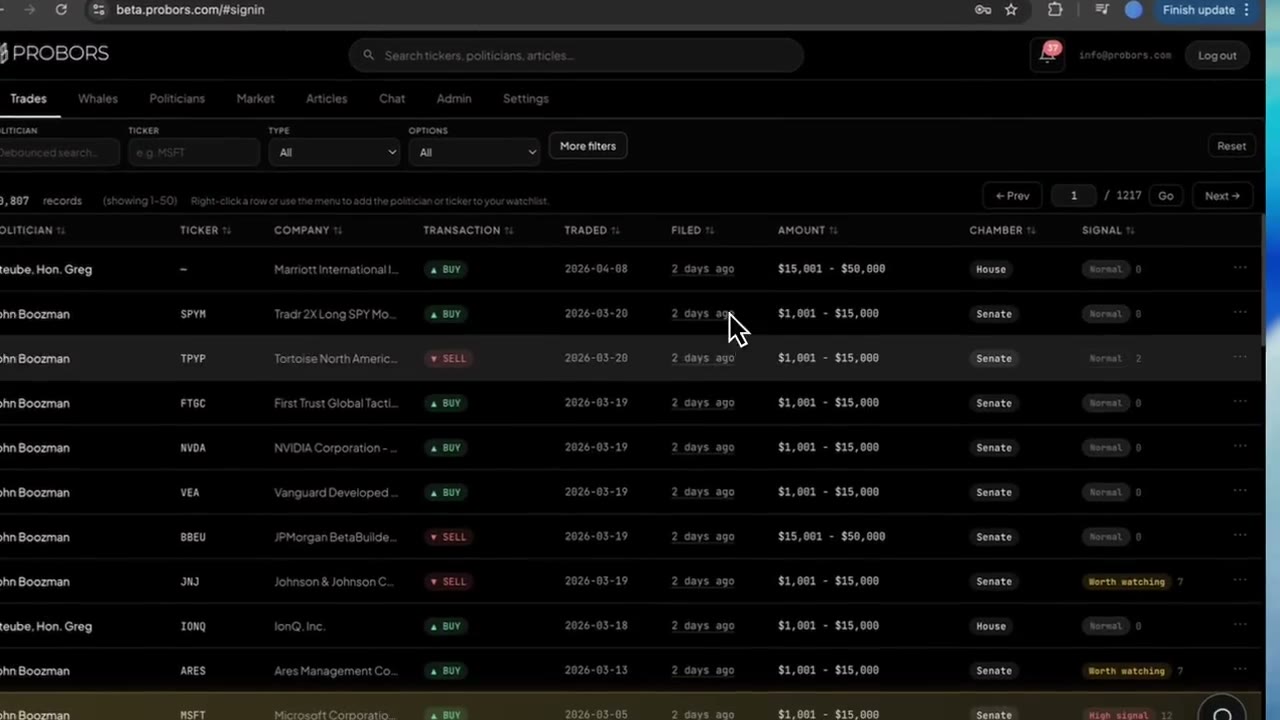
Start from a row, not a headline. Open Congressional trades on probors.com, find the disclosure you care about, and open row detail. Copy politician name, chamber, transaction type, traded date, filed date, amount, and ticker or security description into a blank memo template before you write narrative.
-
Split House and Senate in the memo header. One line:
Chamber: House (PTR)orChamber: Senate (periodic). Different bodies follow different calendars; mixing them in one timeline is the fastest way to mis-date a trade. -
Write lag in words and numbers. Compute calendar days between transaction and filing dates. Example phrasing: “17-day lag” or “filed the same day as the trade.” Never describe a late-August trade disclosed in late September as “this week’s purchase” without naming both dates.
-
Classify the line item. Tag the row as common stock, partial sale, call/put, exchange, Treasury or fund line, or missing-ticker private entity. Options and LLC lines get their own memo section—they are not folded into a simple “bought stock” tally. See how to filter congress trades by transaction type for filter habits that match these tags.
-
Add cross-row context in one paragraph. From the politician profile, note prior filings on the same ticker (reversals, repeated trims) or quiet gaps. If multiple members touched the same symbol in a filing week, link to research when multiple politicians trade the same ticker—but do not imply coordination without evidence.
-
Verify before you upgrade the memo to “publishable.” Walk every field against the House Clerk PTR or Senate eFD PDF. Check for amendments. Run the verification before sharing checklist if the memo might become a social post.
-
Archive with filing date and your pull date. Save the memo with
Filed: {date}andResearched: {date}so future you knows whether a newer amendment superseded the row. If ingestion looked stale, note ProBors data status in the footer.
Examples from recent filings
Recent filings in ProBors as of September 29, 2026 show three memo shapes you will see often: a same-day House equity sale, a lagged Senate common-stock purchase, and a House derivative-style line on a fund description without a listed equity ticker.
| Politician | Chamber | Ticker / asset | Type | Traded | Filed | Lag | Amount range | Signal |
|---|---|---|---|---|---|---|---|---|
| Pete Sessions | House | AAPL | Sale | September 22, 2026 | September 22, 2026 | 0 | $100,001–$250,000 | Normal |
| Mitch McConnell | Senate | WFC | Purchase | September 1, 2026 | September 21, 2026 | 20 | $15,001–$50,000 | Normal |
| Max Miller | House | Mercato Partners Traverse IV QP (no ticker) | Purchase - Call Option | September 4, 2026 | September 27, 2026 | 23 | $1,001–$15,000 | Normal |
Memo snippets (illustrative structure only):
- Sessions / AAPL: House PTR; sale; traded and filed September 22, 2026 (0-day lag); $100,001–$250,000 bracket; Normal signal—note ProBors reversal context vs prior AAPL activity before calling this a “new position story.”
- McConnell / WFC: Senate periodic; purchase; September 1 trade filed September 21 (20-day lag); small bracket; treat as portfolio maintenance until PDF confirms account owner and share description.
- Miller / fund line: House; Purchase - Call Option on a Mercato Partners fund description; September 4 trade filed September 27 (23-day lag); no equity ticker on the row—quote the security text from the PDF and keep it out of stock purchase tallies.
Use tables like this as raw input; the memo prose should always lead with transaction date and chamber.
Common mistakes when drafting memos
- Leading with filing date in the title line. Editors see “filed September 28” and assume the trade was that week. Put transaction date first.
- Dropping amount brackets. “Senator bought Wells Fargo” without the $15,001–$50,000 band overstates economic significance.
- Merging Senate batches into one trade. A single filing date can cover multiple trade dates; one memo per row unless the PDF clearly groups them.
- Treating signal labels as conclusions. High signal or Worth watching is triage text—your memo should still cite dates and PDF confirmation.
- Skipping non-ticker rows. LLC and fund lines need the security description in the memo body, not a forced ticker guess.
FAQ
How long should a congressional disclosure memo be?
One screen is enough: half a dozen bullet fields, one short context paragraph, and a verification checkbox. Longer memos are for committee hearings or multi-row batches—not every PTR line.
Should I write one memo per politician or per row?
Default to one memo per row you might cite. Combine only when a single PDF submission clearly covers multiple lines with one filing date and you have verified each line in the source.
Where do signal scores fit?
After dates and type. Note the ProBors tier (Normal, Worth watching, High signal) as a triage flag, then explain whether lag or reversals drive the label. See ProBors trade signal scores for how to read reasons without treating them as forecasts.
Can I share the memo externally before verifying the PDF?
Use it internally for editorial triage. External publishing should wait until step 6 confirms politician, chamber, type, dates, and bracket against the official filing.
How does this relate to a weekly review?
Weekly reviews choose what to research; memos document what you learned about specific rows. Pair this workflow with how to run a weekly congress disclosure review so quiet weeks still produce verified notes.
Turn disclosure rows into verified notes
Open congressional trades on ProBors, compare filing lag, and link each memo line to the original House or Senate PDF.
Get startedRelated reading
- How to verify congressional trade disclosures before sharing
- How to read politician trade disclosures
- Congress trades filed September 18–22, 2026
- How to compare filing date vs transaction date
- Senate stock trading tracker
Sources
- House Clerk Financial Disclosure (PTR) search
- Senate Financial Disclosures (eFD)
- STOCK Act (Pub. L. 112-105)
- House Ethics — Financial Disclosure
- Rows were checked in ProBors and should be verified against the original filing.
- For ingestion health, see ProBors data status.
Sources & methodology
Last updated:
ProBors uses public disclosure records, SEC filings, House and Senate financial disclosure portals, market data, and in-product workflow checks. Articles are written as research education, not investment advice.