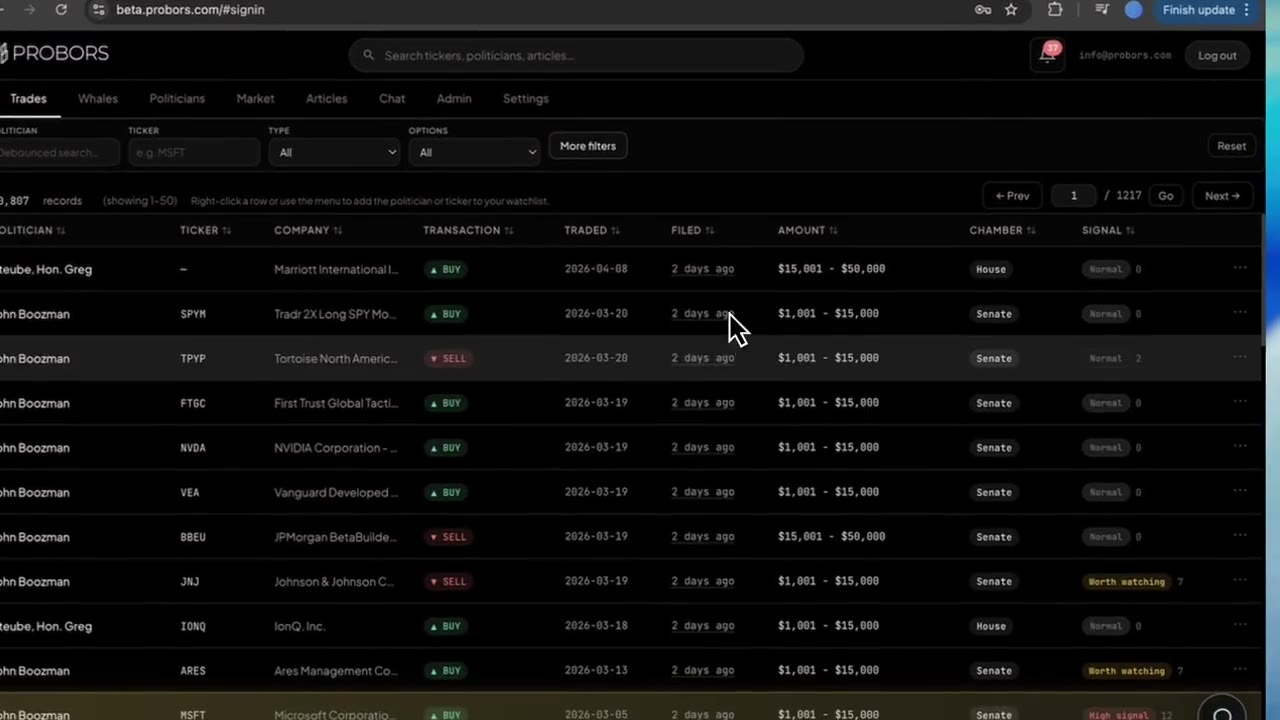
Congressional trust batch filings are multi-line House PTRs where the security description names a family or brokerage trust—not a single spontaneous stock pick. ProBors lists each line with trade date, filing date, signal label, and amount bracket, but trust batches still need a dedicated workflow: one filing date can cover a dozen small purchases and sales that look like a portfolio rebalance when you read the PDF as one event. This seven-step process helps you spot trust labels, measure lag across the batch, shortlist Worth watching rows, and write accurate notes without calling every ticker a member conviction trade. This is research context, not investment advice.
Why trust batches deserve their own pass
Trust and joint brokerage accounts appear often in House PTR data. A member may file one PDF when a statement closes, producing many rows that share a filing date but span several trade dates and asset types.
Trust-batch research fails when you:
- Attribute every line to the member personally when the owner field says trust, joint, or dependent account
- Count rows as conviction — twelve $1,001–$15,000 lines is usually housekeeping, not twelve directional bets
- Ignore mixed buy/sell mixes — purchases and partial sales in one batch often reflect rebalancing, not a sector call
- Skip the PDF owner block — ProBors carries trust hints in the security text; the Clerk PDF confirms them
If you only need generic batch triage for 50+ row dumps, start with large congressional disclosure batches. This guide focuses on trust-labeled multi-line House filings where owner context drives the headline.
Seven-step trust batch workflow on ProBors
-
Find the batch by filing date, not ticker. Open Congressional trades on probors.com, sort by filing date descending, and look for one politician repeating across many rows on the same filed date. Note chamber (House PTR), row count, and the member name before you read tickers.
-
Confirm trust language in row text. Open disclosure context on a few lines. Trust batches often include phrases such as “David Taylor Trust,” joint brokerage numbers, or similar account labels in the security description. If every shortlisted line references the same trust or joint account, treat the batch as one filing event with multiple asset lines—not unrelated trades.
-
Map trade-date span and filing lag. Inside the batch, record the earliest and latest transaction dates and compute lag in whole days for the shortest and longest lines. Trust batches frequently show 7- to 14-day lag from trade week to filing date while still beating Senate periodic delays. Log lag per row you might cite; see filing lag screening for bucket definitions.
-
Split purchases, sales, and partial sales. Tally buys and sells separately. A batch with six purchases and six sales in the same bracket band is often rotation across sectors, not accumulation. Pair this step with transaction type filters when you need a clean count.
-
Shortlist by signal label, then amount bracket. Start with Worth watching (and any High-tier rows if present). In large trust batches, most lines stay Normal because size sits in the smallest brackets. Use signal score filters when you want a floor before opening PDFs.
-
Verify owner and line detail in the House PDF. Follow the original filing link from the row. Confirm owner code, trust name, ticker spelling, partial vs full sale wording, and whether amended lines supersede earlier entries. Run the same checks in verify before sharing before any public note.
-
Write one batch summary, not twelve micro-headlines. Your note should state: member, trust or joint account label, filing date, trade-date window, buy/sell mix, and one or two verified shortlist tickers—with owner context in the first sentence. Add tickers to a watchlist only after step 6 passes.
Examples from a November trust batch
Recent filings in ProBors as of November 15, 2026 illustrate the pattern: twelve deduplicated equity lines filed November 12, 2026 for Rep. David Taylor, with security text referencing the David Taylor Trust and trade dates of November 3 and November 5, 2026 (roughly 7- to 9-day lag). All amount brackets below are $1,001–$15,000.
| Politician | Chamber | Ticker | Type | Traded | Filed | Lag | Amount range | Signal |
|---|---|---|---|---|---|---|---|---|
| David Taylor | House | ETN | Purchase | November 3, 2026 | November 12, 2026 | 9 days | $1,001–$15,000 | Worth watching |
| David Taylor | House | AVGO | Purchase | November 5, 2026 | November 12, 2026 | 7 days | $1,001–$15,000 | Normal |
| David Taylor | House | GOOGL | Purchase | November 3, 2026 | November 12, 2026 | 9 days | $1,001–$15,000 | Normal |
| David Taylor | House | AMGN | Sale | November 3, 2026 | November 12, 2026 | 9 days | $1,001–$15,000 | Normal |
| David Taylor | House | PG | Sale | November 5, 2026 | November 12, 2026 | 7 days | $1,001–$15,000 | Normal |
How to read this batch in the workflow:
- One event, many lines: Shared filing date and trust language mean you summarize the batch before you tweet individual tickers.
- Worth watching on ETN: One flagged purchase among mostly Normal small-bracket lines—open the PDF to confirm trust owner text before treating it as industrial-sector conviction.
- Mixed buys and sells: Purchases in semiconductors and staples alongside sales in consumer names fit rebalancing more than a single-theme bet—compare against mid-November congressional filings for the wider House-only week.
What this does not prove
Trust batch workflow organizes public STOCK Act rows tied to trust or joint accounts. It does not prove the member personally chose each trade, predict returns, or replace reading the House Clerk PDF. Amount fields remain ranges; signal labels are triage inside ProBors—not buy or sell recommendations. A busy trust filing can be routine statement housekeeping even when a headline-friendly ticker appears.
FAQ
How is a trust batch different from a spouse or joint account filing?
Trust, spouse, and joint labels all require owner context in your notes. Trust batches often file many lines at once when a trustee or broker statement closes. Use spouse and joint disclosure research when owner codes vary within one politician’s history.
Should I exclude trust rows from a congressional ticker study?
Only if your question is strictly member-direct trading. For full disclosure research, keep trust lines—but label them and avoid blending trust purchases with personal-account sales in one count.
Why do trust batches cluster on one filing date?
Periodic account statements and PTR deadlines push multiple trade dates into a single submission. The filing date is when the public learned about the activity—not when every trade occurred.
When should I escalate a trust line to full PDF review?
Escalate when signal tier is Worth watching or higher, amount bracket jumps above your usual floor, the ticker matches a live policy calendar, or you plan to cite the row outside private notes.
Can Senate periodic reports include trust activity?
Yes. Senate batches can include trust lines with longer lag. This workflow centers on timely House PTR trust dumps; pair with Senate-only week research when the chamber mix shifts.
Research trust batches with owner context
Filter congressional rows on ProBors, confirm trust labels in the source PDF, and track politicians without misreading batch size as conviction.
Get startedRelated reading
- How to research large congressional disclosure batches
- How to research spouse and joint congress disclosures
- Congress trades filed mid-November 2026
- How to screen congress trades by filing lag
- House stock trading tracker
Sources
- House Clerk financial disclosure portal
- House Ethics — PTR due date calculator and guidance
- STOCK Act (S. 2038, 112th Congress)
- Rows were checked in ProBors and should be verified against the original filing.
- ProBors data status for ingestion health.
Sources & methodology
Last updated:
ProBors uses public disclosure records, SEC filings, House and Senate financial disclosure portals, market data, and in-product workflow checks. Articles are written as research education, not investment advice.